
 By
The latest technology trends worth following are the ones that change how you work, communicate and spend your day, not every headline that promises a revolution. Smarter assistants, connected devices, tougher security and greener software all qualify. Most of the rest is noise. Here’s how to tell the difference without reading a hundred tech blogs.
Trends move fast, and that’s exactly why a filter helps. A good one asks whether something solves a real problem, whether it’s still useful after the launch buzz fades, and whether it fits the tools you already own. Keep that filter in mind and the rest of this guide will feel a lot more practical.
What Counts as a Real Technology Trend?
A real trend is a shift that keeps growing across products, industries and everyday habits, rather than a one season fad. It shows up in many places at once. When several unrelated devices, apps and services start doing the same new thing, you’re probably looking at something that will stick around.
That’s why hype alone is a poor guide. A single flashy launch tells you very little. Look for patterns instead, like the same feature appearing in phones, home gadgets and office software. In fact, spotting repetition is the quickest way to separate a lasting change from a passing headline.
How Can You Spot a Trend Early?
- Notice features that appear in several unrelated products.
- Watch what ordinary users keep using after the first month.
- Check whether it saves time, money or effort.
- See if the idea survives beyond a single brand.
None of this needs special tools. A notebook and a bit of curiosity do the job. Tech Team organizes its articles into Tech, Gadgets and Software sections, and browsing across all three is a handy way to see the same idea show up in different forms.
Which Trends Are Shaping Everyday Technology?
Among the latest technology trends, several themes keep coming up. Assistants that help with writing and planning, devices that talk to each other, stronger security habits, and a growing interest in lower impact software all stand out. None of these is brand new on its own, but together they’re changing what people expect from the tools they buy.
Smarter Assistants and Everyday Automation
Assistants now sit inside email, phones and office apps, handling small jobs like summaries, drafts and reminders. The real benefit is time. Used well, they clear the dull stuff so you can think about the work that actually needs you. The trap is trusting them blindly, so always read the output before you send or publish it.
Connected Devices and Better Security
More everyday objects now connect to the internet, from watches to home cameras to speakers. That convenience comes with a cost, because every connected device is another door to protect. Strong passwords, regular updates and a quick look at privacy settings go a long way. Security isn’t a bonus feature anymore. It’s part of the purchase.
Greener Choices in Software
People are asking harder questions about the environmental side of technology. Tech Team recently published pieces on green web browsers, which shows how even something as ordinary as browsing is getting a sustainability angle. Whether those claims hold up is worth checking for yourself, but the fact that the question exists says plenty.
How Do You Choose Gadgets and Software That Actually Fit Your Life?
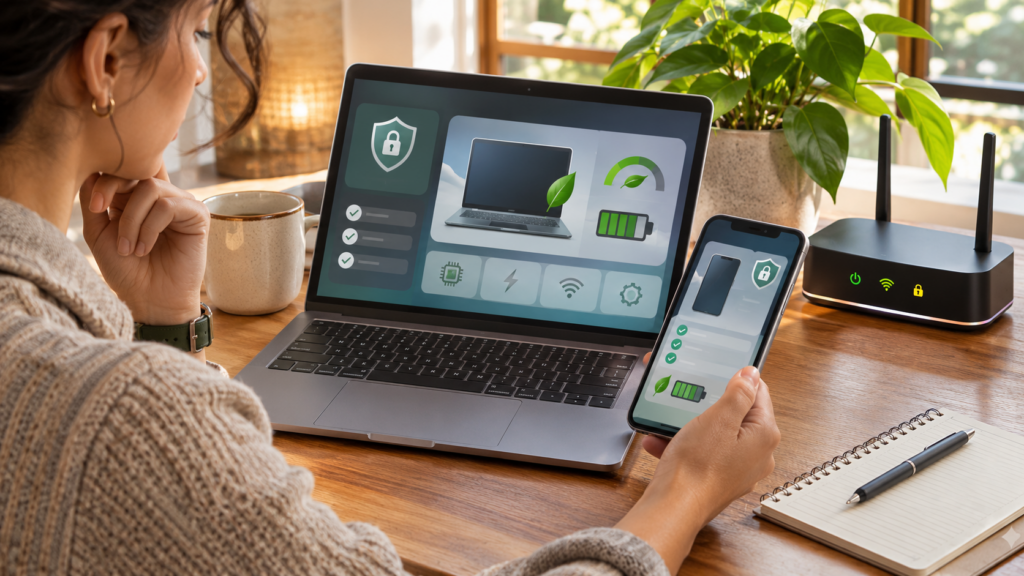
Choosing the right technology gadgets and software starts with one plain question: what problem are you trying to solve? Write that down before you compare a single feature. It keeps you from paying for extras you’ll never touch, and it makes every review you read a lot easier to judge.
A Short Checklist Before You Buy
- Does it work with the devices and apps you already use?
- What does it cost over a year, including subscriptions?
- How often does it receive updates and security fixes?
- Can you return it or cancel without hassle?
Picture a freelance designer shopping for a new tablet or a better laptop. She lists her actual tasks, notices that three of her five weekly jobs need a keyboard, and picks the laptop. The tablet looked cooler. The laptop solved her problem. That’s the whole method, and it works for almost any purchase.
Red Flags Worth Noticing
- Reviews that only praise and never mention drawbacks
- Prices that hide required subscriptions
- Features described vaguely, with no practical example
- Pressure to buy before a countdown timer ends
Where Can You Keep Up With New Technology Without Burning Out?
Pick two or three trusted sources and check them on a schedule, instead of chasing every notification. Tech Team’s Tech, Gadgets and Software categories are one option, and its articles range from small business IT upkeep to voice and data cabling and deepfake analysis. A short weekly read beats a daily scroll every time.
Also, try one new thing at a time. Add a tool, use it for two weeks and decide whether it earned its place. Honestly, the people who feel least overwhelmed by technology aren’t the ones who know the most. They’re the ones who say no to most of it.
Conclusion
The latest technology trends are easier to follow once you stop treating them like a race. Look for patterns, test one thing at a time, and match every purchase to a real need. Choosing technology gadgets and software wisely is mostly about asking good questions before you spend a single cent.
If you’d like to keep reading, the Tech, Gadgets and Software sections on Tech Team make a friendly next step. Pick one article this week, apply the checklist above and see how it changes your decision. You might be surprised how quickly the noise fades.
FAQs
What are the latest technology trends in simple terms?
They’re the shifts showing up across many products at once: smarter assistants, connected devices, stronger security habits and greener software. Look for ideas that repeat everywhere rather than one off launches.
How often should I upgrade my gadgets?
Upgrade when your current device stops meeting a real need, such as missing security updates or slowing down your work. A new model launching isn’t a good enough reason by itself.
Are expensive gadgets always better?
No. The best choice is the one that fits your tasks, works with your existing tools and costs a fair amount over time. Price alone says very little about how useful something will be.
How do I avoid information overload?
Choose two or three trusted sources, set a weekly reading time and test only one new tool at a time. That routine keeps you informed without turning technology into a daily chore.