 By
By Modern law enforcement relies heavily on digital evidence. Surveillance cameras, body-worn cameras, mobile phones, and public recording systems generate massive amounts of video every day. While this footage provides valuable information, it is often affected by low resolution, poor lighting, motion blur, and compression damage.
This is where video enhancement software plays a vital role. By improving clarity, restoring detail, and strengthening visual accuracy, these tools help officers and investigators turn weak recordings into reliable evidence. For agencies focused on efficiency, transparency, and accountability, video enhancement software has become an essential part of modern investigations.
This article explains how video enhancement software supports law enforcement, how it improves evidence quality, and why it is a critical tool in today’s investigative environment.
Understanding Video Enhancement Software in Law Enforcement
Video enhancement software is designed to analyze recorded footage and improve its visual quality through advanced processing techniques. It identifies flaws such as noise, blur, distortion, and low contrast, then applies corrective methods to restore clarity and balance.
Unlike traditional editing tools that focus on creative effects, video enhancement software focuses on accuracy and technical improvement. Its main purpose is to increase visibility without changing the factual content of the recording.
In law enforcement, this precision is essential. Enhanced footage must remain authentic, defensible, and suitable for legal review.
Why Video Quality Matters in Investigations
Video evidence often plays a central role in criminal investigations and court proceedings. Poor-quality footage can delay cases, weaken testimony, and reduce public trust.
Clear video allows officers to identify individuals, analyze behavior, verify timelines, and reconstruct events with confidence. It also supports transparency by providing objective documentation.
Video enhancement software strengthens these outcomes by converting unclear recordings into usable evidence that supports fair and accurate decision-making.
Common Challenges in Law Enforcement Video Footage
Law enforcement agencies collect video in unpredictable environments. Footage may come from dimly lit streets, moving vehicles, crowded areas, or damaged devices.
Common challenges include low resolution, digital noise, unstable camera movement, poor lighting, color distortion, and compression artifacts. These problems reduce interpretability and limit investigative value.
Video enhancement software addresses these challenges by restoring balance and improving overall image quality.
Improving Resolution and Visual Detail
Low-resolution footage lacks fine detail and becomes pixelated when enlarged. This limits its usefulness in suspect identification and scene analysis.
Modern video enhancement software uses artificial intelligence and advanced upscaling methods to reconstruct missing information. These systems analyze textures, edges, and patterns to rebuild visual structures.
Instead of stretching existing pixels, intelligent algorithms generate new data based on learned models. This process produces sharper images while maintaining natural appearance.
Improved resolution allows investigators to observe details that were previously difficult or impossible to see.
Noise Reduction and Image Clarity
Digital noise appears as grainy patterns that distract viewers and hide important visual elements. It often occurs in low-light recordings or low-quality devices.
Video enhancement software separates noise from meaningful image data using advanced filtering techniques. These filters remove unwanted artifacts while preserving edges and textures.
The result is cleaner, smoother footage that remains detailed and visually stable. Improved clarity strengthens evidence reliability and reduces misinterpretation.
Enhancing Lighting and Contrast
Poor lighting is one of the most common reasons video becomes difficult to analyze. Shadows hide faces and objects, while overexposed areas remove important detail.
Video enhancement software automatically adjusts brightness, contrast, and dynamic range. It balances light levels across each frame to restore natural visibility.
These corrections improve depth perception and scene readability. Enhanced lighting makes footage easier to review and more useful in investigations.
Restoring Accurate Color Representation
Color accuracy plays an important role in identifying clothing, vehicles, and objects. Many recordings suffer from faded tones or unwanted color shifts.
Video enhancement software uses color correction tools to rebalance channels and eliminate distortions. These adjustments restore realistic appearance and visual consistency.
Accurate color representation improves credibility and supports professional evaluation in legal settings.
Motion Stabilization and Blur Reduction
Body cameras, handheld devices, and vehicle-mounted systems often produce shaky footage. Movement causes blur and instability that weakens image sharpness.
Video enhancement software applies stabilization algorithms to smooth camera motion. It also analyzes movement patterns to reduce blur and sharpen moving subjects.
This combination produces steadier and clearer recordings that improve comprehension and reduce viewer fatigue.
Frame Analysis and Temporal Enhancement
Modern video enhancement software analyzes relationships between consecutive frames through temporal processing. By comparing multiple frames, the system reconstructs missing information and strengthens visual continuity.
This approach improves clarity without introducing artificial distortion. Temporal enhancement plays a key role in restoring degraded or incomplete footage.
For long investigations involving extended recordings, this consistency is especially valuable.
Role in Digital Investigations and Evidence Review
In criminal investigations and legal proceedings, evidence integrity is essential. Video enhancement software supports professionals working in digital forensics by improving visibility while preserving authenticity.
Enhanced footage helps investigators analyze scenes, verify timelines, confirm identities, and support witness statements. When applied responsibly, enhancement strengthens evidence without altering factual content.
This balance between clarity and integrity makes video enhancement software suitable for courtroom use.
Professional Applications in Law Enforcement Agencies
Video enhancement software supports many operational areas within law enforcement. Investigators use it for case analysis. Analysts apply it to surveillance review. Legal teams rely on it for evidence preparation. Training departments use it for scenario evaluation.
Across agencies, these tools help convert raw recordings into reliable visual records that support accurate reporting and informed decision-making.
Artificial Intelligence and Automation
Artificial intelligence plays a major role in modern video enhancement software. AI systems learn from large datasets and recognize complex visual patterns.
These models automate tasks such as upscaling, noise removal, sharpening, and stabilization. Automation improves consistency, reduces processing time, and minimizes human error.
AI-powered enhancement delivers faster results while maintaining high accuracy and reliability.
Preserving Evidence Integrity and Compliance
In law enforcement environments, protecting original data is mandatory. Video enhancement software creates working copies while preserving source files.
Advanced systems maintain detailed processing logs and validation records. These records support transparency, chain-of-custody requirements, and legal compliance.
Integrity preservation ensures that enhanced footage remains trustworthy and defensible in court.
Accessibility for Officers and Analysts
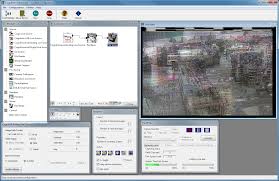
Modern video enhancement software is designed for users at all experience levels. Clear interfaces, guided workflows, and automated presets simplify complex processes.
Officers and analysts improve footage without advanced technical training, while specialists retain access to detailed customization tools. This balance improves productivity and reduces training barriers.
User-friendly design supports efficient case handling.
Choosing Reliable Video Enhancement Solutions
Not all platforms deliver consistent or legally defensible results. Selecting the right software affects accuracy, security, and long-term performance.
Strong solutions offer advanced AI processing, reliable noise reduction, accurate color correction, secure data handling, and professional technical support.
Trusted providers such as Cognitech develop professional-grade video enhancement systems designed specifically for investigative and forensic applications.
Reliable platforms ensure dependable outcomes and long-term operational value.
Cost Efficiency and Operational Benefits
Investing in video enhancement software reduces the need for repeated investigations, external consulting, and equipment upgrades.
Improved footage supports faster case resolution and reduces administrative delays. Over time, these benefits generate measurable cost savings and productivity improvements.
Quality enhancement tools support sustainable law enforcement operations.
Future Trends in Law Enforcement Video Enhancement
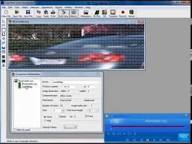
Video enhancement software continues to evolve through deeper artificial intelligence integration, cloud-based processing, and real-time enhancement capabilities. These advancements improve processing speed, accuracy, and accessibility.
Future systems will allow faster evidence review, better cross-platform compatibility, and more automated reporting. These developments will further strengthen investigative efficiency and transparency.
Best Practices for Effective Use
To achieve reliable outcomes, agencies should work with original footage whenever possible, preserve source files carefully, avoid excessive reprocessing, apply gradual adjustments, and document enhancement steps clearly.
These practices support accuracy, compliance, and long-term evidence integrity.
Final Thoughts
Video enhancement software has become an essential tool for modern law enforcement. Through intelligent processing, resolution improvement, noise reduction, color correction, and stabilization, these systems transform low-quality recordings into clear and reliable evidence.
From investigations supported by digital forensics to courtroom preparation and public accountability, video enhancement software improves accuracy, efficiency, and confidence. With proper selection and responsible use, it strengthens justice systems and protects investigative integrity.
By understanding how video enhancement software works and applying it correctly, law enforcement agencies gain greater control over evidence quality and long-term operational reliability.