

 By
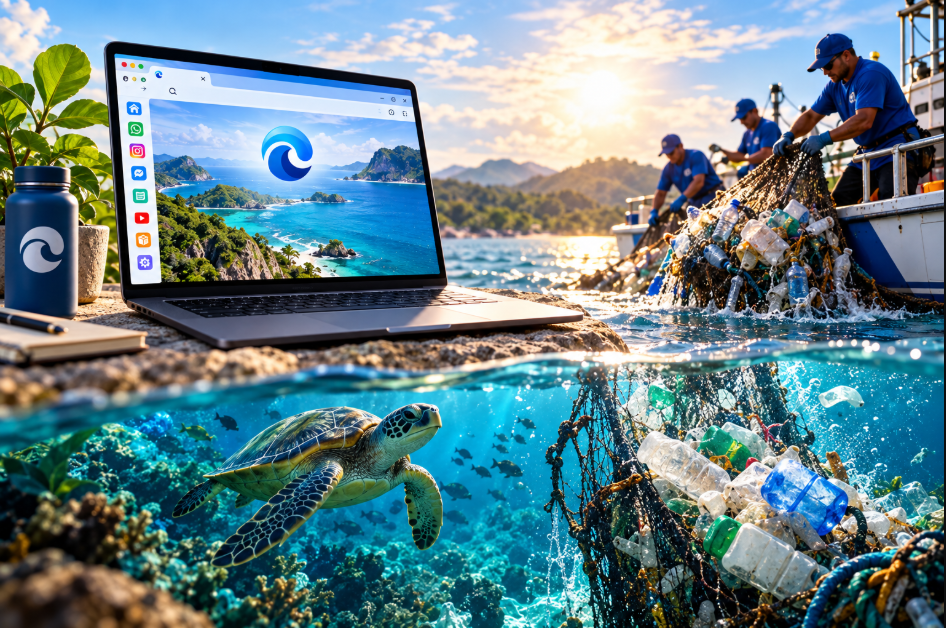
Yes, an eco-friendly web browser can help clean the ocean, albeit indirectly and in a rather limited fashion. The browser doesn’t “clean the plastic” out of the water. What it can do is donate a portion of its revenues to a cleanup organization that will pay crews to do the cleanup. The most obvious example at the moment is Wave Browser, created by the company Eightpoint. It works with 4ocean and each time you browse it aids in cleanup. If you are looking for much more than this then it may not be sufficient. How the idea works, what the published numbers say and where a healthy dose of skepticism should belong.
So what is an “eco-friendly browser”?
The phrase has two opposing meanings. One is a browser that is light on your device, so it uses less power. The other is a browser that channels funds to an environmental cause. Wave is in the second group. The creators claim that some of the profits go towards the international clean-up effort and the buyer has no need to pay for anything additional or donate specifically.
This is important when you make a change. An eco-friendly label does not provide any information on the amount of electricity the software consumes. Wave is not about saving energy, it is about ocean plastic.
How can Wave Browser make browsing a cleanup operation?
Wave’s solution is powered by its Certified Cleanup Partnership with 4ocean, which it claims has removed over 40 million pounds of plastic and waste from oceans, rivers and coastlines since its inception. The partnership was announced with a commitment from Wave to remove 100,000 pounds over 12 months. The browser also has an impact tracker, so that the user can see his/her impact, rather than just hearing a vague promise.
The money is not ether. It contributes to paying the wages for the cleanup crew, boats and transport, according to Wave’s monthly reports. Simply put, the more you browse, the more people will be incentivized to collect plastic waste where it ends up in the water. The country that I read about repeatedly is Indonesia followed by Guatemala later on.
What does the reporting suggest to you?
Wave releases a report regularly every other month or so. According to the company’s own data, approximately 7,500 pounds were pulled in October 2025 and again in November, with the cleanup effort taking place over 34 operations in Indonesia. December had a weight of 7,507 pounds on eight verified operations and January 2026 was 7,511 pounds. During the entire year of 2025, Wave contributed to the removal of 70,027 pounds with the help of its community.
On February 26, 2026, the 100,000 pound mark was officially reached. One month’s cleanup effort had reached 8,340 pounds by June 2026 in Indonesia and Guatemala. The longer goal is 300,000 pounds by 2028. It’s not explosive, it’s consistent which, to be fair, is more believable than a sudden jump.
But 100,000 pounds is a lot, right?
Context matters here. Since the 1950s, over 18 trillion pounds of plastic have been manufactured, and some of that is introduced into the sea, PlasticsToday reports. In that number, 100,000 pounds is like a drop in the ocean. With 50 million pounds collected, according to Wave, even 4ocean’s global total is quite low compared to the scale of production.
This is not a waste of time. Each pound is lost is a pound that can’t be divided into smaller parts or be eaten by marine animals. It’s only that the browser is a supporting tool and not a solution. The greater levers are still doing their bit by implementing less single use plastic, improved waste systems in coastal areas and policy. If you feel you’ve done your part by switching browsers, then the risk is complacency. It’s a fair reward if it’s an additional habit for a habit that you already have.
Where does the plastic go after it’s been collected?
It’s not the collection; it’s the use. According to Wave’s own materials, recovered waste can be used as raw inputs, thus decreasing waste and contributing to circular production. Recycled ocean plastic products are just that – products created from material removed from the ocean which are used for something new rather than being sent to landfill. Not all collected trash is recyclable, so don’t consider it a right for every pound, but a target.
Are the assertions believable?
Only a bit of skepticism is warranted for most of the numbers above, since they have come from Wave itself. According to the company, each pound is weighed and double checked by its partner and they have published a page explaining this. As PCMag’s article on the subject suggests, is there any real benefit to changing browsers to be able to save the ocean? There are a few ways this can be read and this is one of them.
Any green claim can be judged on three criteria: a named partner, specific numbers, with dates and locations, and a regular reporting schedule. Wave has all three. I can’t find any third-party audit that has been published separately from the two companies. This does not indicate that something is missing, but it is important to be aware of it.
Who should change and who can do without it?
If you are already using a mainstream browser, and you are willing to give another browser a chance, then Wave is free and requires a bit of set up time. Import bookmarks, check extensions, give it a week to see how it works. If you are using a workflow which is only supported in your current browser, it might not be worth the hassle to change. In either case consider this to be a low-effort contribution, and continue to make larger environmental changes.
Conclusion
Funding, not magic can help the ocean with an eco-friendly browser. Wave Browser will donate a portion of its revenue to 4ocean, will be reporting periodically and has already reported on cleanup efforts of over 100,000 pounds. That is true, but not as big as the problem of plastic worldwide and most numbers are self-reported.


